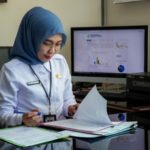
29 Jul Harnessing Health Worker Data in Indonesia
In Jakarta, Indonesia’s bustling capital city, Dr. Ani Ruspitawati’s office oversees more than 5,500 health facilities — known locally as Puskesmas — which serve a population of 10 million people....




In Jakarta, Indonesia’s bustling capital city, Dr. Ani Ruspitawati’s office oversees more than 5,500 health facilities — known locally as Puskesmas — which serve a population of 10 million people....

In this two-part series, we call for country leaders to consider whether they are optimizing their health workforce and offer some resources and tools to help ensure uninterrupted care and continued provision of high-quality health services. In Part 1, we provided three recommendations to support...
In this two-part series, we call for country leaders to consider whether they are sufficiently optimizing their health workforce to respond to the pandemic and to contribute to longer-term health system resilience. We offer resources and tools to help leaders ensure uninterrupted care and...
Malaria surveillance—identifying where transmission is occurring to best pinpoint targeted responses to eliminate infections—is crucial to malaria prevention, control, and elimination. The Togolese National Malaria Control Program (NMCP), which has a high level of expertise in malaria sentinel site surveillance, welcomed a delegation from...
From 2016 to 2019, the USAID-funded HRH2030 activity in Jordan provided tailored technical assistance and capacity building interventions to meet Jordan’s human resources for health (HRH) needs. HRH2030 partnered with the Ministry of Health (MOH), High Health Council (HHC), Civil Service Bureau (CSB), and...
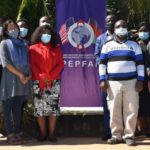
As Malawi nears HIV epidemic control, standardizing the roles and responsibilities for health care workers at the community and facility levels is a key step in maximizing the country’s HIV efforts. This month, PEPFAR Malawi, jointly with the CDC, USAID, and HRH2030 Malawi, hosted...

With USAID’s emphasis on equity, quality, and resource optimization as critical outcomes for health systems, along with local and world events that continue to illustrate glaring inequities within the global community, the HRH2030 global team has been analyzing our six years of work through...
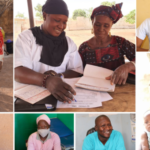
The Human Resources for Health in 2030 (HRH2030) Mali program, funded by USAID Mali from January 2018 to December 2020, provided technical assistance directly to the Ministry of Health and Social Development (MHSD) to strengthen human resources management for the health workforce and improve...